

Share
Author
George Anderson
Share
First published Dec 14, 2021. Refreshed April 29, 2026.
B2B Portals for Manufacturers: Definition, Features, and Real-World Examples
A B2B portal (also called a customer portal or self-service portal) is a secure platform that allows customers, distributors, and partners to interact directly with your business—placing orders, checking inventory, viewing invoices, and managing their accounts online.
For manufacturers using SAP ERP, a B2B portal plays a critical role. It connects directly to SAP to deliver real-time pricing, product availability, order status, and account data, eliminating manual processes like phone calls, emails, and spreadsheets.
In this guide, we’ll walk through real-world B2B portal examples, the key features manufacturers need, and how these portals improve both customer experience and operational efficiency.
Why B2B portals matter for manufacturers
Modern B2B buyers expect the same speed, transparency, and convenience they experience in their personal lives. For manufacturers, that means moving beyond manual processes and delivering a better way to do business.
Without a B2B portal, customers rely on phone calls and emails for basic tasks like placing orders, checking status, or requesting invoices. This creates friction for customers and adds significant workload for your customer service team.
A well-designed B2B portal changes that by enabling self-service access to real-time SAP data, reducing errors, and improving efficiency across the order-to-cash process.
Click to jump:
1. Giving customers 100% accurate, real-time data
2. B2B portal with great customer adoption rates
3. Customer self-service restored
4. Twelve unified B2B portals in nine countries
5. Salvaging a spare parts business with a B2B portal
6. Replacing a B2B portal and maintaining deep SAP integration
7. Eliminating phone, fax, and email ordering
8. B2B Portal Checklist
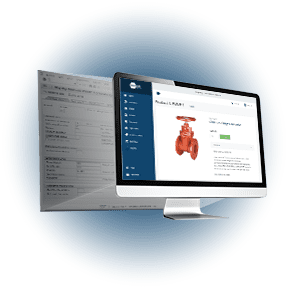
B2B portal vs eCommerce vs SAP Commerce Cloud
Not all digital commerce solutions serve the same purpose. Manufacturers often evaluate B2B portals alongside eCommerce platforms or SAP Commerce Cloud, but the use cases are very different.
| Capability | B2B Portal | eCommerce Platform | SAP Commerce Cloud |
|---|---|---|---|
| Primary use case | Existing customer self-service | Online sales growth | Enterprise digital commerce |
| SAP integration | Real-time, SAP driven | Often middleware based | Complex integration required |
| Implementation time | Faster | Moderate | Long |
| Complexity | Moderate | Moderate | High |
| Best for | Manufacturers with SAP ERP | Retail / hybrid models | Large-scale digital transformation |
Example 1: SAP-integrated B2B portal for accurate inventory visibility (InHealth Technologies)
- Challenge:
- InHealth Technologies, a manufacturer of voice restoration products, had a B2B portal that was not integrated with SAP ERP. As a result, customers saw unreliable inventory data and couldn’t trust product availability. Customer service reps had to manually verify orders in SAP and communicate constantly with customers, creating friction and increasing operational workload.
- Solution:
- InHealth Technologies implemented a B2B portal with real-time SAP integration, ensuring that inventory, pricing, and product data are always accurate and driven directly from SAP ERP.
- Outcome:
- Customers now have access to reliable, real-time information, improving trust and reducing order issues. Internally, customer service reps no longer need to manually verify availability or duplicate data updates—reducing workload and improving operational efficiency.
Read the full case study here.
 “It was obvious that Corevist had a lot more experience with SAP than the other company that we evaluated. Our IT team advised us that Corevist was the best option.”
—Verónica Beltrán, Marketing Manager
Key functionality: 100% accurate, personalized inventory + pricing
Example 2: Reducing customer service workload with a self-service B2B portal (3A Composites)
- Challenge:
- 3A Composites, a manufacturer of industrial materials, faced an overwhelming customer service burden. Distributors frequently called with routine inquiries about order status, shipments, and invoices, driving up costs and creating a frustrating experience for both customers and internal teams.
- Solution:
- 3A Composites implemented a B2B portal with real-time, SAP driven, order tracking, giving distributors self-service access to order history, shipment status, invoices, and credit information.
- Outcome:
- Customers can now find answers instantly without contacting support, significantly reducing inbound inquiries and improving efficiency. A structured onboarding approach also helped drive strong adoption, ensuring distributors embraced the portal as their primary channel.
Read the full case study here.
 “In the first month, we averaged 200 orders per week. According to our web analytics data, 150 of those orders are being accessed through our new B2B site. That’s phenomenal!”
 “In the first month, we averaged 200 orders per week. According to our web analytics data, 150 of those orders are being accessed through our new B2B site. That’s phenomenal!”
—Kirk Jones, CIO
Key functionality: Self-service tracking
Example 3: Restoring self-service after an ERP migration (Emmerson Packaging)
- Challenge:
- Emmerson Packaging, a manufacturer of flexible packaging solutions, relied on a B2B portal connected to its legacy ERP. After migrating to SAP, the existing portal became unusable, forcing all customer interactions back to phone and email. Given the complexity of order creation and stock release processes, this created significant operational strain and reduced efficiency.
- Solution:
- Emmerson implemented a new B2B portal with real-time SAP integration, enabling customers to manage complex order placement and stock release workflows directly within the portal.
- Outcome:
- Customer self-service was fully restored, reducing reliance on manual communication and improving the overall customer experience. Emmerson not only recovered from the disruption of ERP migration but established a more scalable, SAP driven portal for the future.
Read the full case study here.
 “Having live access to their entire account portfolio enables our customers to trust the information they are seeing. They can self-serve immediately and export data to analyze further as required.”
 “Having live access to their entire account portfolio enables our customers to trust the information they are seeing. They can self-serve immediately and export data to analyze further as required.”
—Carey Leaman, ERP program manager
Key functionality: Dynamic SAP reports
Example 4: Scaling a global, multi-language B2B portal on SAP (Oregon Tool)
- Challenge:
- Oregon Tool, a global manufacturer of precision cutting equipment, faced pressure to modernize customer interactions and reduce reliance on phone, fax, and email. With operations in more than 110 countries and multiple brands, the company needed to support dealers and distributors across regions—with localized portals and accurate, customer-specific data from SAP ERP. Building and maintaining multiple custom integrations wasn’t feasible given IT constraints.
- Solution:
- Oregon Tool implemented a scalable B2B portal architecture with real-time SAP integration, enabling the company to support multiple portals across regions, languages, and brands—all powered by a single integration layer.
- Outcome:
- The company successfully launched its initial portal for US dealers and distributors, then expanded globally using the same scalable framework. This approach reduced IT burden, ensured consistent SAP-driven data across all portals, and enabled a unified, efficient customer experience worldwide.
Read the full case study here.
 “Our feedback has been extremely positive. Our CSRs are finding that many of the phone and email inquiries that they would have dealt with in the past are now happily being handled by our customers themselves.”
 “Our feedback has been extremely positive. Our CSRs are finding that many of the phone and email inquiries that they would have dealt with in the past are now happily being handled by our customers themselves.”
—Barry Brunetto, VP IT
Key functionality: Translation management
Example 5: Rebuilding a B2B portal to support digital transformation (Bell and Howell)
- Challenge:
- Bell and Howell, a large North American service organization, needed to modernize its spare parts business following a major corporate restructuring. Its existing B2B portal lacked essential functionality, no product images, no descriptions, and no support for online payments, resulting in low adoption. At the same time, the company needed a solution that could integrate with SAP without increasing IT workload.
- Solution:
- Bell and Howell implemented a B2B portal with prebuilt SAP integration, enabling real-time data access while adding critical commerce capabilities such as product content, online ordering, and credit card payments.
- Outcome:
- The new portal significantly improved the customer experience, driving adoption and enabling customers to place orders and complete payments online. Internally, the solution required minimal IT involvement, while helping Bell and Howell accelerate cash flow and support its broader digital transformation strategy.
Read the full case study here.
“The response has been huge. It’s night and day. Customers have literally been applauding our changes. I think one of our customers said it best when he summed it up in one word, ‘Hallelujah.’”
—James Feely, VP and General Manager of Service Solutions.
Key functionality: Personalized catalogs
Example 6: Replacing a legacy SAP portal without losing functionality (LORD Corporation)
- Challenge:
- LORD Corporation, a diversified manufacturing company, relied on a B2B portal built on SAP ISA—a platform that is no longer supported. The company needed to replace this legacy system without disrupting the customer experience or losing the functionality their users depended on.
- Solution:
- After evaluating several market-leading B2B eCommerce platforms, LORD found that many options were too complex, costly, and difficult to align with their SAP-first architecture. Instead, they implemented a B2B portal with deep, real-time SAP integration, ensuring that all business data, pricing logic, and transaction processing remained within SAP.
- Outcome:
- LORD successfully transitioned away from an unsupported platform while preserving the capabilities their customers relied on. By keeping SAP as the single source of truth, the company reduced complexity, avoided unnecessary IT burden, and established a scalable foundation for future growth.
Read the full case study here.
“Our motto is, ‘If you can do it in SAP, that’s where it should stay’. We wanted our B2B portal to be a reflection of our SAP system, not a recreation of it. And, we wanted a vendor that shared our philosophy.”
—Jane Mascia, Senior Business Systems Analyst
Example 7: Supporting multiple stakeholders with a single SAP integrated B2B portal (PARI Respiratory)
- Challenge:
- PARI Respiratory, a global manufacturer of respiratory care products, needed to launch a B2B portal that met the needs of multiple stakeholders. Dealers and distributors wanted a faster, more convenient ordering experience, while customer service teams needed relief from manual order entry. At the same time, marketing required a modern product catalog, and IT needed a secure, real-time SAP integration that wouldn’t increase workload.
- Solution:
- PARI implemented a B2B portal with real-time SAP integration, enabling self-service ordering, a modern product catalog, and secure access to SAP data—all within a single platform.
- Outcome:
- The portal successfully aligned the needs of customers, marketing, and IT. Customers gained a more efficient ordering experience, customer service workload was reduced, and IT maintained a secure, SAP-driven architecture without added complexity.
Read the full case study here.
“We are extremely pleased with the outcome of this project. This could have been a story about competing interests and agendas, but it wasn’t. Our customers got the online ordering system they requested.”
—Dale Anderson, CFO
Key functionality: Error-free order posting to SAP
8. B2B Portal Checklist: Key Capabilities to Consider
While each of these B2B portal examples is unique, they share a common goal: bringing the order-to-cash (OTC) process online to improve transparency, efficiency, and customer experience.
At a high level, manufacturers should look for capabilities like:
- Real-time pricing, inventory, and order data from SAP
- Self-service order tracking, invoices, and account visibility
- Online ordering with business rule validation
- Support for digital payments and account management
- Scalability across regions, brands, and customer types
For a complete breakdown of B2B portal features and requirements, see our full guide to B2B portal functionality.